Best Practices in Roma Education in Ireland
14 November 2025

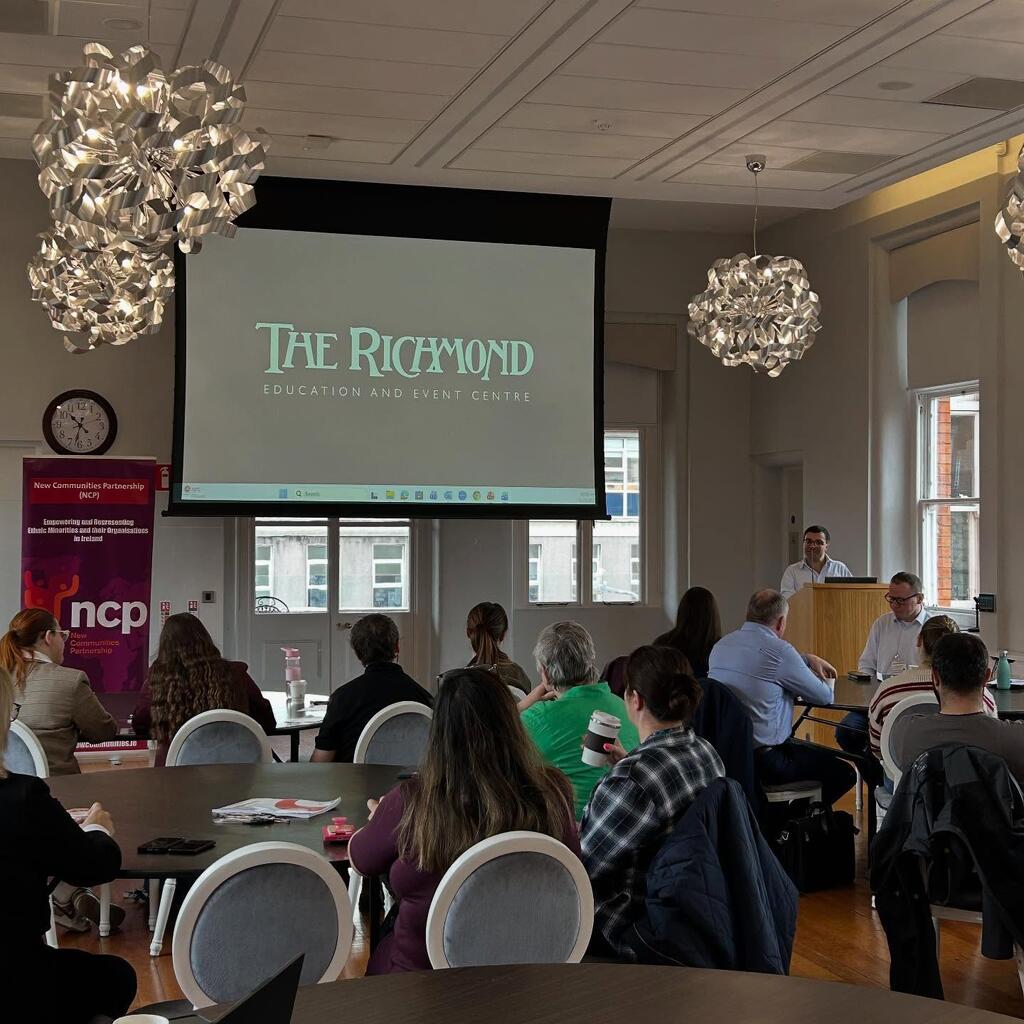
New Communities Partnership, together with the SIRIUS Policy Network for Migrant Education and Paradise Place Educate Together School, hosted the Best Practices in Roma Education in Ireland conference on 5 November 2025 in Dublin. The event brought together policymakers, educators and community organisations to review progress and identify practical steps to strengthen the inclusion of Roma learners.
Speakers from the Department of Education and Youth Social Inclusion Unit, TESS from TUSLA, the DCU Anti-Bullying Centre and Paradise Place Educate Together National School outlined current challenges and examples of good practice.
National Strategy and Best Practice
The Department of Education presented the Traveller and Roma Education Strategy 2024 to 2030, which focuses on improved participation, better outcomes, stronger partnerships and clearer accountability. The strategy will also support fifteen Community Link Workers nationwide.
International and Irish examples of effective practice were shared, including Roma teachers and mentors, early years programmes, community engagement and the STAR project, which supported more than one thousand four hundred Traveller and Roma learners across fifty-five schools.
Implementation and School Experience
TESS outlined its work in outreach, attendance planning and community support, including early years engagement through seventeen Family Link Workers. In a school-based presentation, Paradise Place Educate Together National School highlighted the importance of trust, communication and cultural inclusion, along with challenges such as attendance, housing instability and language barriers.
Key Themes and Recommendations
Group discussions identified several priorities:
Improved cultural understanding and teacher training
Better interpretation and language support for families
Addressing barriers related to housing, transport and basic needs
Stronger transition support from primary to post-primary
More reliable, sensitive data collection
Greater cooperation across Government departments
The conference recommended increased early years engagement, enhanced mediation and interpretation, better attendance supports, dedicated transition pathways and expanded community based programmes.
Conclusion
The event showed clear progress but also emphasised the need for sustained investment and coordinated action. Long term collaboration between schools, communities and Government will be essential to improve educational outcomes for Roma children and young people in Ireland.